 Skip to main content


1
Takes 2 Minutes
Register & Enrol
Create your free account in seconds, enrol in the specialist first aid course and pay securely. Access begins immediately.

Accredited First Aid Training at supervisor and manager level with Instant Certificate
Take your first aid course 100% online with Irish First Aid, the provider workers and employers at supervisor and manager level choose first. Study on any device from site supervisors, shift managers, team leads or anywhere across Irish workplaces at every level of management, pass the online assessment and hold your first aid certificate today. CPD certified, RoSPA approved and fully HSA aligned.
#1Most Chosen Provider at supervisor and manager levelMost Chosen at supervisor and manager level
The first aid course Supervisors and Managers workers and employers choose first. Built around HSA standards with real videos and plain, easy to follow language, and the same accredited certificate accepted across Irish workplaces at every level of management.

 Bestseller



CPD Certified Instant Certificate 100% Online
Because first aid is our whole specialty, the first aid course at Irish First Aid, Emergency First Aid at Work, goes deeper than a general provider ever could: every compression, every bandage and every emergency decision is shown calmly on video with readable text beside it, comfortable for learners of every nationality. The emergency first aid training follows current resuscitation guidelines, meets HSA expectations and issues a recognised first aid certificate accepted throughout Ireland, the UK and Europe. Irish First Aid proudly serves learners across Irish workplaces at every level of management, including site supervisors, shift managers, team leads, operations managers, facility managers, HR managers.










































Your first aid certificate is four simple steps away, wherever you are at supervisor and manager level: site supervisors, shift managers, team leads or anywhere across Irish workplaces at every level of management. The whole first aid course runs online around your own schedule.
Create your account, pay securely and the first aid course opens immediately. No dates, no waiting lists, no classroom.
Phone, tablet or laptop, at work or at home. Pause the first aid training mid lesson and resume exactly where you stopped.
Sit the first aid assessment when you feel ready. Every retake is free, so there is no pressure at all.
The second you pass, your first aid certificate is generated, ready to print or send to any employer.

Irish First Aid is operated by a legally registered company, and this first aid course carries independent approval from leading professional bodies. Employers at supervisor and manager level, from site supervisors and shift managers to team leads, accept our certification without question, as do businesses across Ireland, the UK and Europe.
Finish the first aid training at Irish First Aid and an officially recognised first aid certificate lands in your account instantly, accepted by employers at supervisor and manager level and right across Ireland, the UK and Europe.
Thousands of Irish workers, parents and teams certify their first aid skills with Irish First Aid every year.
Get Certified Today
Let's be honest with you. The internet is full of scam training websites and reviews no real customer wrote. That's why we do the opposite. Every review we have comes from a real person who took a real course with us. No fakes. No hidden feedback. They are all on Google Maps, where we can't edit or rewrite them. Be especially careful with scam websites showing reviews that appear to come from platforms such as Reviews.io. Reviews displayed on their own website may be fake, because the website owner can add, edit or fabricate them directly in the site code. Always verify the business on Google Maps instead. Today, we hold the No.1 spot across Ireland, with more real reviews than any other health and safety training company, built on 30 years of real work at honest prices. You don't have to take our word for it. Just tap the Verify us on Google button below and read every review.
Straight answers about the first aid course for Supervisors and Managers learners: local acceptance, online delivery, certification and pricing at Irish First Aid.
Yes, without question. The first aid course is CPD Certified, RoSPA approved and fully aligned with HSA requirements, exactly what employers at supervisor and manager level ask for. from site supervisors and shift managers to safety officers and business owners, local businesses accept our certification every single day.
Every first aid certificate carries a unique verification code, so any employer, inspector or insurer can confirm it in seconds. It is the same accredited certificate trusted right across Ireland, the UK and Europe.
Not at all. The first aid course is 100% online, so there is no classroom to book, no travel across Supervisors and Managers and no waiting for course dates. Start the first aid training the moment you enrol, from site supervisors, shift managers, team leads or anywhere else across Irish workplaces at every level of management.
Study on any phone, tablet or computer at your own pace, pass the online assessment and download your first aid certificate instantly. The whole process usually takes about 1-2 hours.
Emergency First Aid at Work is our complete online first aid course, the awareness level emergency first aid training Irish workplaces use to meet the first aid duty in the Safety, Health and Welfare at Work Act 2005. One single course covers the DRABC primary survey, CPR and AED awareness, choking, bleeding control, burns, scalds and shock, taught to specialist depth.
The Emergency First Aid at Work course online takes about 1-2 hours, works on any device and ends with a short assessment with unlimited free retakes. Pass it and your Emergency First Aid at Work certificate downloads instantly: CPD certified, RoSPA approved and accepted by employers across Ireland, the UK and Europe.
The first minutes that matter most: the DRABC primary survey, CPR and AED awareness, helping a choking casualty, stopping serious bleeding, treating burns and scalds, recognising shock and handing over properly when the ambulance arrives.
Because first aid is our only subject, each skill is shown, repeated and tested until it stays with you. Pass the friendly online assessment and your first aid certificate downloads instantly.
Yes. The Safety, Health and Welfare at Work Act 2005 and HSA guidance require every Irish employer to provide first aid equipment and enough trained people to respond to emergencies, scaled by the workplace risk assessment.
An accredited first aid course is the accepted proof of that training, and every certificate we issue carries a unique verification code that employers, insurers and auditors can confirm in seconds.
Nominated workplace first aiders above all, but genuinely everyone benefits: office and site staff, hospitality and retail teams, teachers and creche workers, carers, coaches, drivers, security staff and parents who want the skills at home too.
If you have been nominated first aider, or simply want to be the person who knows what to do, this emergency first aid training is for you.
About 1-2 hours of focused study completes the first aid course online. It is fully self-paced, so you can split it across breaks or evenings, and progress saves automatically on every device.
Your first aid certificate generates the instant you pass, ready to download, print or email. No classroom day, no travel, no waiting.
You simply try again, free, as many times as you need. Review the material calmly and retake the assessment when you feel ready.
Questions cover only what the first aid course actually teaches, with no tricks, which is why nearly everyone passes and learners rate the experience so highly.
Valid for 3 years from your pass date, in line with HSA best practice and CPD and RoSPA refresher guidance. The expiry date is printed on the first aid certificate itself.
Renewal means logging back in, completing the refreshed first aid course and downloading the new certificate on the spot. The Employer Dashboard warns you before any first aider lapses.
Exactly the price shown on this page, nothing more. That single price includes the full emergency first aid training, unlimited assessment retakes and the instant first aid certificate.
Teams save automatically with volume discounts applied at checkout, and the free Employer Dashboard makes certifying first aiders across every shift a one afternoon job.
Absolutely. The first aid course online runs flawlessly on any smartphone, tablet or computer, and your progress follows you between devices automatically.
The platform is open 24/7, every day of the year, so the first aid training fits around shifts and family life. Friendly Irish support is one message away whenever you need it.
Gladly, that is our bread and butter. The free Employer Dashboard registers staff in bulk, assigns the first aid course to each person, shows live progress and stores every first aid certificate in one tidy screen.
Offices, schools, hotels and factories across Ireland certify their first aiders through Irish First Aid.
The first aid course runs beautifully on PC, laptop, tablet and smartphone, from the office desk to the kitchen table, anywhere in Ireland. Learners at supervisor and manager level study from home, from work or on the move, with no classroom visit needed anywhere across Irish workplaces at every level of management.


Certifying first aiders across shifts and departments is painless with the specialists. Every seat comes with instant access, unlimited retakes and no time limits, and the free Employer Dashboard assigns the first aid course, tracks progress live and collects every certificate in one place. Businesses at supervisor and manager level certify entire teams in a single afternoon, with every certificate collected in one place.
The first aid training is fully accredited and compliant with Irish legislation. Businesses at supervisor and manager level, from site supervisors and shift managers to safety officers and business owners, rely on it every single week.
Explore Team TrainingEarning your first aid certificate at supervisor and manager level could not be simpler. Register, work through the first aid course online at your own pace, pass the assessment and download your accredited certificate instantly, wherever you are across Irish workplaces at every level of management.
Create your free account in seconds, enrol in the specialist first aid course and pay securely. Access begins immediately.
HD video lessons, calm demonstrations and interactive content, available around the clock on phone, tablet or computer with no deadlines attached.
Take the online first aid assessment whenever you feel prepared. Retakes cost nothing and support is always close by.
Your accredited first aid certificate appears the moment you pass, recognised by employers across Ireland, the UK and Europe.
Discover why workers and businesses at supervisor and manager level, from site supervisors, shift managers, team leads and beyond, choose Irish First Aid for first aid training.
The first aid course at Irish First Aid fits Supervisors and Managers working life perfectly. Supervisors and managers carry personal legal duties under Irish safety law: they assign the work, so they must understand the risks, verify the training and lead by certified example. Instead of losing a day to a classroom, learners at supervisor and manager level complete the full accredited training online, in about 1-2 hours, from home or straight from the workplace.
Local employers know exactly what they are looking at when your certificate arrives: CPD Certified, RoSPA approved, HSA aligned training from a provider used by businesses across Irish workplaces at every level of management. The unique verification code on every certificate makes checks instant, whether you work in site supervisors, shift managers or team leads.
For businesses, the free Employer Dashboard turns a team rollout into one afternoon of work: bulk registration, live progress and every first aid certificate in one clean screen, with automatic volume discounts applied at checkout.
Most providers sell first aid as one course among dozens. At Irish First Aid it is the entire business, and the depth shows: every compression rate, every bandage technique and every emergency decision gets proper treatment instead of a passing mention.
The syllabus follows current Irish and European resuscitation guidelines and HSA expectations: the primary survey, CPR and AED awareness, choking, wounds, burns, shock and a clean handover to paramedics.
The result is a first aid course that employers recognise as genuinely specialist, backed by a certificate they trust on sight.
Nobody learns life saving skills well under pressure. Every lesson streams on any device, every pause saves your place, and each technique is shown slowly, clearly and correctly before it is ever tested.
Start the first aid training after the kids are asleep, continue at lunch and finish on the weekend. Progress syncs across every device automatically.
No classroom day, no travel, no waiting list: enrol now, certify today.
Pass the assessment and the digital first aid certificate is generated on the spot, aligned with current guidelines and recognised across Ireland, the UK and Europe.
It lives permanently in your account for re-download during audits, job applications and insurance renewals, and its unique verification code lets any employer confirm it instantly.
On a CV, the first aid certificate is among the most universally respected credentials there is, because every workplace wants someone who knows what to do.
Every module comes from licensed, Chartered (CMIOSH) consultants following current resuscitation guidelines, with techniques demonstrated slowly, clearly and correctly.
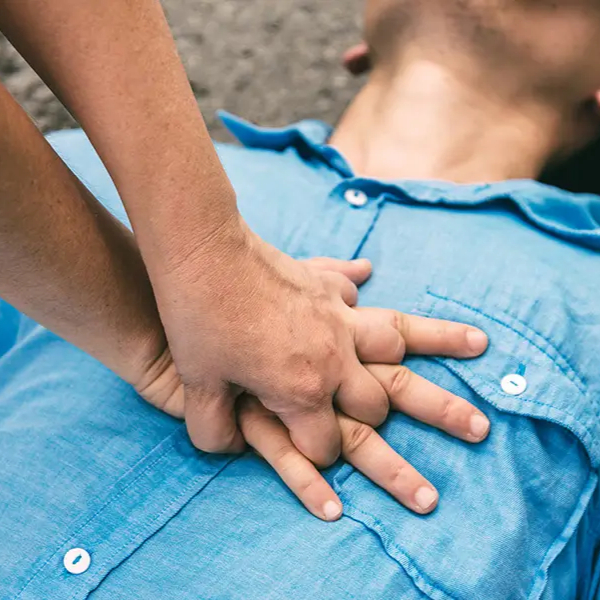
You learn effective chest compressions, the correct response to choking, how to control bleeding that will not stop and how to treat burns in the first minutes. Each skill is shown, repeated and tested so it stays with you.
Content is re-reviewed against updated guidelines and HSA guidance, so the first aid course never drifts out of date.
A classroom first aid day costs far more than the ticket price: travel, cover staff and lost hours. The online emergency first aid course removes every one of those costs.
Staff certify from their desks or homes, starting the moment you enrol them, and managers see each completion in real time.
Pricing is honest: one figure covers the full course, unlimited retakes and the instant first aid certificate. No add ons, ever.
The free Employer Dashboard registers staff in bulk, assigns the first aid course to each person, shows live progress and stores every certificate in one clean screen.
Volume discounts apply automatically at checkout, and expiry reminders arrive before any first aider lapses, keeping your coverage permanently audit ready.
Offices, schools, hotels and factories across Ireland certify their first aiders through us year after year.
Every Irish workplace legally needs trained first aiders under the 2005 Act, enough to cover every shift, site and department, with the exact number set by the risk assessment.
In practice, the people certifying with us are nominated first aiders, office and warehouse staff, construction crews, hospitality and retail teams, teachers, creche and care workers, coaches, drivers and a growing number of parents learning for home.
If you have been handed the first aid kit, or you want the confidence to use one, this specialist course is the fastest way there.
The training that decides what happens in the minutes before the ambulance arrives. Available 100% online across Irish workplaces at every level of management.
Emergency first aid training teaches people to act in the first minutes of an accident or medical emergency: assessing the scene with DRABC, performing CPR, relieving choking, controlling bleeding and treating burns until professional help takes over. The Safety, Health and Welfare at Work Act 2005 and HSA guidance require every Irish employer to maintain first aid arrangements with trained people, and the specialist first aid course at Irish First Aid meets that knowledge requirement in full.
In cardiac arrest, survival chances fall roughly 10% for every minute without CPR, and no Irish ambulance beats that clock alone. The bystander is the real first responder. A specialist first aid course online creates capable bystanders, calms panicked rooms and delivers an instant, recognised first aid certificate.
For Supervisors and Managers specifically, the need is real and immediate: the 2005 Act places duties directly on those who direct work, HSA investigations examine supervision first, and a certified management team is the strongest compliance signal a business can hold. An accredited first aid course completed online today keeps you compliant, job ready and safe, with a recognised first aid certificate at supervisor and manager level that employers trust on sight.
The 2005 Act and HSA guidance require first aid equipment and trained people in every Irish workplace. A recognised first aid course keeps your business compliant and clear of HSA enforcement and fines.
The specialist first aid course is CPD certified and RoSPA approved, and the certificate is accepted by employers across Ireland, the UK and Europe.
Complete the emergency first aid training in roughly 1-2 hours, on any device, anywhere in Ireland. The certificate downloads the moment you pass, no classroom involved.
Nominated first aiders, refresher renewals or life saving skills for home: whatever brings you here, the specialist Emergency First Aid at Work course handles it. CPR, choking, bleeding, burns, shock and emergency response, all in one accredited online emergency first aid course with an instant certificate. Proudly serving learners in site supervisors, shift managers, team leads, operations managers, facility managers, HR managers and every corner of Supervisors and Managers.
The law, the definitions and the practical steps behind this course, explained in plain language and cited to the legislation. Free to read, written to be quoted.
All 8 First Aid guidesOnline Emergency First Aid at Work for first aiders, workplace first aiders, supervisors and workplaces. Same course in 1-2 hours, same instant First Aid Certificate, no travel and no classroom required.
From central Dublin to rural Donegal, the same online First Aid Course works in every part of Ireland - same instant certificate, no travel and no waiting list.
From a busy Dublin workplace to a rural creche, one HSA-aligned course covers every workplace model in Ireland.
Everything an Irish first aider needs - aligned with HSA, Safety, Health and Welfare at Work Act 2005 and the European Resuscitation Council (ERC) Guidelines 2021.
Common questions Irish first aiders and workplaces ask before booking - certificate validity, accreditation, same-day delivery, and when First Aid Training is legally required - all answered in plain language.
The same accredited online course with instant certificate, wherever you are:
Arklow Ashbourne Athlone Balbriggan Ballina Ballinasloe Blanchardstown Bray Cahir Carlow Carrick-on-Suir Castlebar Cavan Clare Clondalkin Clonmel Cork Donegal Drogheda Dublin Dundalk Dungarvan Dun Laoghaire Ennis Enniscorthy Finglas Galway Gorey Greystones Kerry Kildare Kilkenny Killarney Laois Letterkenny Limerick Longford Louth Lucan Mallow Maynooth Mayo Meath Midleton Monaghan Mullingar Naas Navan Newbridge Offaly Portlaoise Roscommon Sligo Swords Tallaght Thurles Tipperary Tralee Tuam Tullamore Waterford West Cork Wexford Wicklow First Aid Certificate First Aid Refresher Emergency First Aid Course Basic First Aid Course Workplace First Aid Course First Aid Regulations First Aid Team Size Guide First Aid QQI Aligned First Aid Course Cost First Aid Test and Assessment
The most searched ways to find first aid training online, all leading to the same accredited course with an instant certificate:
First Aid Course Cost Recommended Safety Consultants Recommended Safety Consultants Courses Recommended Safety Consultants Training Recommended Safety Council Recommended Safety Council Courses Recommended Safety Council Ireland Recommended Safety Council Ireland Courses Recommended Safety Council Ireland Training Recommended Safety Council Training Recommended Safety Institute Recommended Safety Institute Courses Recommended Safety Institute Training Recommended Safety Ireland Recommended Safety Management Recommended Safety Management Courses Recommended Safety Management Training Recommended Safety Organisation Recommended Safety Organisation Courses Recommended Safety Organisation Training Recommended Safety Training Centre Courses Recommended Safety Training Centre Training Recommended Safety Training Ireland Recommended Skill Ireland Training Recommended Workplace Health and Safety Recommended Workplace Health and Safety Courses Recommended Workplace Health and Safety Ireland Recommended Workplace Health and Safety Ireland Courses Recommended Workplace Health and Safety Ireland Training Recommended Workplace Health and Safety Training Recommended Workplace Safety Recommended Workplace Safety Courses Recommended Workplace Safety Training Safety Hub Training Top Irish Safety Academy Courses Trusted Workplace Safety Courses Accredited Safety Council Courses Best Irish Safety Centre Courses Compliance Training for Employers Essential Safety Training First Aid Course Safetech First Aid Team Training Health and Safety Consultancy Courses Ireland Health and Safety Training Hospitality Irish HACCP First Aid Training Irish Safety Institute Training Ireland Low Cost First Aid Training Official Health and Safety Training Ireland Online Safety Training Platform Ireland


